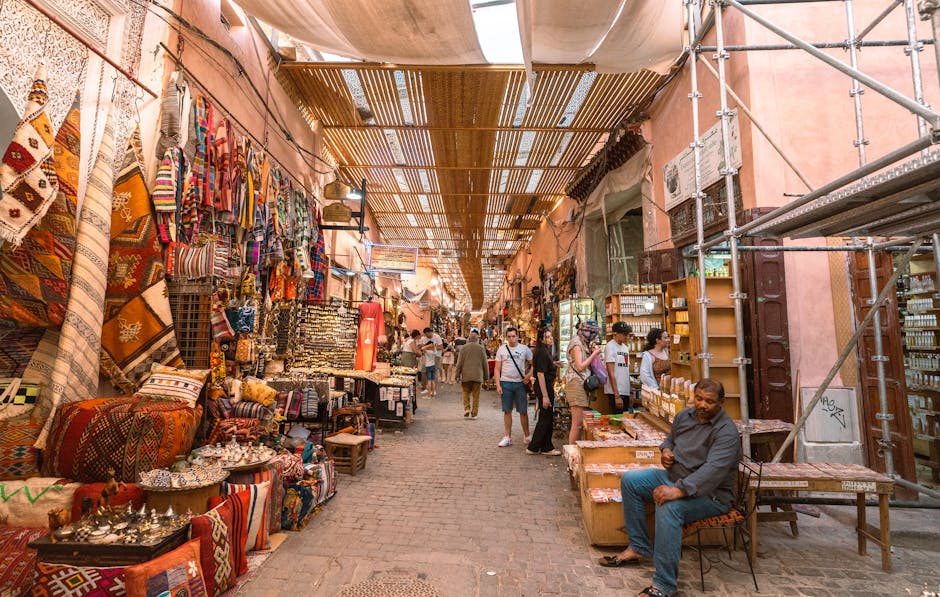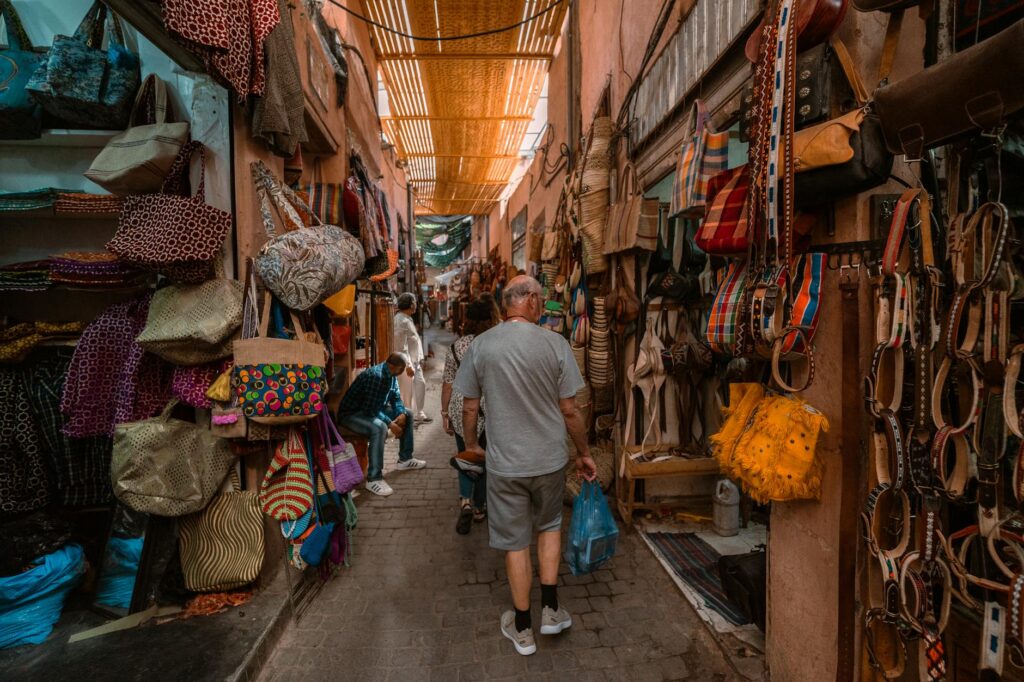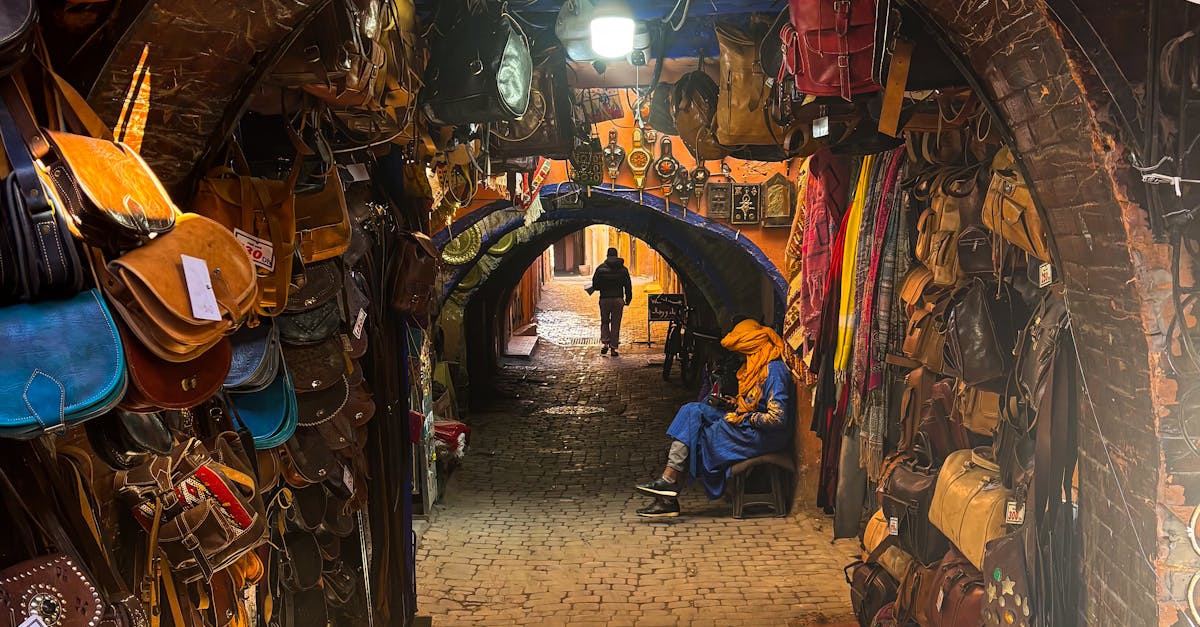
Stepping into the Dyers souk marrakech feels like walking straight into a living, breathing oil painting where every corner drips with vibrant shades of indigo, saffron, and poppy red. As a local who has spent years navigating the winding arteries of the medina, I can tell you that this specific corner of the city—locally known as Souk Sebbaghine—is where the soul of Marrakech truly feels most alive. You can smell the damp wool and the earthy minerals long before you see the first skeins of yarn hanging from the rafters like colorful stalactites.
It is a place where time seems to have folded in on itself, leaving the modern world at the heavy cedar doors of the entrance. If you want to experience the “real” Morocco, the one that exists beyond the shiny gift shops and the polished cafe terraces, then spending an hour or two lost in the steam and shadows of the Dyers souk marrakech is an absolute necessity for your soul.
Table of Contents
The Sensory Magic of the Dyers souk marrakech
How to Find the Dyers souk marrakech Without Getting Lost
The Ancient Art: How They Dye the Wool
Photography and Respect in the Souk Sebbaghine
What to Buy and How to Bargain Like a Local
Practical Information for Your Visit
What to Do After the Sensory Overload
Frequently Asked Questions
The Sensory Magic of the Dyers souk marrakech
When you first enter the Dyers souk marrakech, your senses will likely go into a bit of a panic, but in the best way possible. The air is thick with the smell of wood smoke from the fires that heat the massive copper cauldrons.
There is a specific humidity here that you won’t find in the dryer, more open parts of the medina. You’ll hear the rhythmic “thwack” of wet wool being beaten against stone and the chatter of artisans who have been working these same stalls for generations.
It is not just about the visual beauty of the hanging yarns. It is about the heat radiating from the workshops and the sight of men with hands stained deep blue or dark orange, a permanent badge of their trade.
This is a working souk, not a museum. You will see carts pulled by donkeys squeezing through narrow gaps and craftsmen rushing past with bundles of raw materials on their shoulders.
The Dyers souk marrakech is one of the few places left where you can see the grit and the glory of Moroccan craftsmanship happening in real-time, right in front of your eyes. It is messy, it is loud, and it is absolutely beautiful.
How to Find the Dyers souk marrakech Without Getting Lost
Finding your way to the Dyers souk marrakech can be a bit of a challenge if you are relying solely on Google Maps, as the GPS signal tends to bounce off the high walls and get confused in the narrow alleys.
The best way to find it is to start at the famous Jemaa el-Fnaa square and head north into the heart of the markets. You will likely pass through the more commercial areas first.
If you find yourself in the busy Marrakech Souk Semmarine, keep walking straight until the path starts to fork and narrow. Look for signs pointing toward “Souk Sebbaghine.”
As a local tip, look up. If you see colorful wool hanging over the street from the wooden beams above, you are getting very close to the heart of the Dyers souk marrakech.
Don’t be afraid to ask a shopkeeper for directions. Just say “Souk Sebbaghine?” with a smile, and they will point you in the right direction. Just be wary of “helpful” strangers who offer to lead you there for a fee; a simple “Non, merci” is usually enough.
The journey to find it is half the fun. You’ll pass through the blacksmiths’ area and the leather workers’ stalls before the sudden explosion of color tells you that you’ve arrived.
The Ancient Art: How They Dye the Wool
The techniques used in the Dyers souk marrakech haven’t changed much in hundreds of years. The process starts with raw wool or silk, which is cleaned and prepared for the vats.
Artisans use natural dyes derived from plants and minerals to create the iconic Moroccan palette. Indigo creates those deep, royal blues, while saffron and pomegranate skins produce vibrant yellows and oranges.
Poppy seeds are used for the famous “Berber lipstick” red, and crushed mint or alfalfa can be used for greens. Watching a master dyer dip a bundle of white wool into a bubbling vat and pull it out a shocking shade of turquoise is like watching a magic trick.
The wool is then boiled with alum or other fixatives to make sure the color stays vibrant for decades. After the boiling process, the wool is rinsed and hung to dry in the sun.
This is why the Dyers souk marrakech looks the way it does. The ceiling of the souk is essentially a giant drying rack, with thousands of threads dripping dry above the heads of the shoppers below.
It takes incredible physical strength to lift the heavy, wet bundles out of the pots. These men work in high temperatures all day long, yet they often have a quick joke or a tea ready for their neighbors.
Photography and Respect in the Souk Sebbaghine
Everyone wants that iconic photo of the Dyers souk marrakech with the light streaming through the wooden slats and the colorful wool. I get it; it’s one of the most photogenic spots in all of DestinaRoad‘s home city.
However, it is very important to remember that these people are working. Imagine if someone walked into your office and started snapping photos of you while you were trying to finish a report!
Always ask for permission before taking a photo of a person. A simple nod and a “S’il vous plaît?” goes a long way. Some artisans might ask for a few dirhams in exchange for a photo, which is perfectly fair considering you are capturing their likeness and their craft.
If you want to get the best shots of the hanging wool in the Dyers souk marrakech, try to go in the late morning when the sun is high enough to penetrate the narrow streets but hasn’t yet created harsh shadows.
Be mindful of the flow of traffic. Don’t stand in the middle of a narrow path to set up a tripod. The “balak, balak!” (look out!) you hear from the cart drivers is a signal that you need to move quickly.
Being a respectful traveler will get you much further than being a pushy photographer. Often, if you show genuine interest in the process, the dyers might even invite you into their workshop to see the vats up close.
What to Buy and How to Bargain Like a Local
You might be tempted to buy a souvenir right in the heart of the Dyers souk marrakech, and you absolutely should if something catches your eye. This is the best place to find high-quality raw materials.
You can buy skeins of hand-dyed wool for knitting or weaving projects back home. You can also find beautiful cactus silk (Sabra) scarves that have been dyed right there in the vats.
When it comes to bargaining for a scarf or a rug in the Dyers souk marrakech, remember that it is a social interaction, not a battle. Start by offering about half of the initial price the vendor gives you.
Smile, be polite, and be prepared to walk away. Walking away is your strongest tool in any Marrakech negotiation. Often, the price will drop significantly as you head toward the next stall.
Check the quality of the dye. A good way to test if a scarf is real silk or “cactus silk” is to pull a tiny thread and burn it (with permission!). If it smells like burning hair, it’s real silk or wool; if it smells like paper, it’s plant-based.
Buying directly from the source in the Dyers souk marrakech ensures that more of your money goes directly to the artisans who are keeping this ancient tradition alive.
Practical Information for Your Visit
To make your trip to the Dyers souk marrakech as smooth as possible, here are some quick facts and tips from a local perspective.
- 📍 Location: Known as Souk Sebbaghine, located in the northern part of the medina, near Souk Semmarine and the Mouassine Mosque.
- ⏰ Best Time to Visit: Between 10:00 AM and 4:00 PM. This is when the workshops are most active and the light is best for photos.
- 💰 Price: It is free to walk through the souk. Budget 20-100 DH if you want to give tips for photos or small guided demos.
- 🎽 What to Wear: Wear comfortable shoes with good grip. The floors near the dyeing vats can be wet and slippery.
- ⚠️ Safety: Watch out for the motorcycles and donkey carts. They stop for no one!
If you visit on a Friday, keep in mind that many workshops close for the midday prayer, and some might not reopen until later in the afternoon. It’s a quieter time to visit, but you might miss the active dyeing process.
The Dyers souk marrakech is relatively safe, but like any crowded tourist area, keep your bags zipped and be aware of your surroundings. Pickpockets are rare but not nonexistent.
What to Do After the Sensory Overload
After the heat and the intensity of the Dyers souk marrakech, you might feel like you need a bit of a breather. The medina can be a lot to take in all at once. A guided Marrakech medina tour with a cooking class and Agafay dinner is a relaxed way to take it in with a local leading the way.
I often recommend that travelers follow up their souk visit with something completely different to balance out the experience. For instance, you might consider an Agafay Desert day trip vs overnight stay to see the contrast between the cramped, colorful city and the wide-open, stony desert.
Returning to the calm of a riad for mint tea is another great way to process everything you’ve seen. The transition from the chaotic beauty of the dyers’ stalls to a quiet courtyard is one of the best parts of the Marrakech experience.
If you still have energy, you can explore the nearby Le Jardin Secret or the Mouassine Museum to see how these dyes are used in traditional Moroccan architecture and textiles.
Whatever you do, don’t rush. The Dyers souk marrakech is a place that rewards those who take their time and let the atmosphere wash over them.
If you’re planning your trip and feel a bit overwhelmed by the logistics of the medina or want to book a private guided tour to find these hidden spots without the stress, we are here to help. Reach out to us for a custom itinerary or local advice to make your Moroccan adventure truly unforgettable.
Get a free local travel quote here.
Frequently Asked Questions
Is the Dyers souk marrakech easy to find?
It can be tricky because of the narrow streets. Look for the hanging wool above you and follow the signs for “Souk Sebbaghine.” It’s north of Jemaa el-Fnaa.
Is it okay to take photos in the Dyers souk marrakech?
Yes, but always ask permission first. The artisans are hard at work, and a small tip (5-10 DH) is often appreciated if you take multiple photos or a video.
What is the best thing to buy at the Dyers souk marrakech?
Hand-dyed wool skeins and cactus silk scarves are the most authentic items. You can also find some great leather goods nearby that use the dyes from the souk.
Are the dyes used in the Dyers souk marrakech natural?
Traditionally, yes. Many workshops still use indigo, saffron, and poppy. However, some have moved to chemical dyes for certain bright colors, so ask the artisan if you are looking for 100% natural.
When does the Dyers souk marrakech open and close?
Most shops and workshops start around 9:00 AM and wrap up by 6:00 PM. The best action happens in the middle of the day.
Hungry after the souk? Terrasse des Epices sits right above the dyers’ souk. Our guide to where to eat in Marrakech covers it and every other address worth planning around — and we book the table for you, free.