Walking into the Marrakech Souk Semmarine feels like stepping directly into the beating heart of a cedar-scented dream, where the air is thick with the aroma of cumin and the rhythmic clanging of copper. As you leave the wide-open space of Jemaa el-Fnaa and cross the threshold into this vaulted corridor, the light shifts from the harsh Moroccan sun to a soft, filtered glow that dances through the overhead slats. It is loud, it is chaotic, and it is arguably the most beautiful sensory overload you will ever experience in North Africa.
Table of Contents
The Main Artery of the Medina
Sensory Overload in Marrakech Souk Semmarine
What to Buy and How to Haggle
Survival Tips for Navigating the Souks
Hidden Gems Near the Main Path
Practical Information for Visitors
Frequently Asked Questions
The Main Artery of the Medina
If the Medina of Marrakech is a labyrinth, then the Marrakech Souk Semmarine is the grand boulevard that holds it all together. It serves as the primary thoroughfare, starting right near the famous square and stretching deep into the heart of the old city. Historically, this wasn’t just a place to buy trinkets; it was a major hub for trade where caravans from across the Sahara would arrive to exchange gold, salt, and textiles.
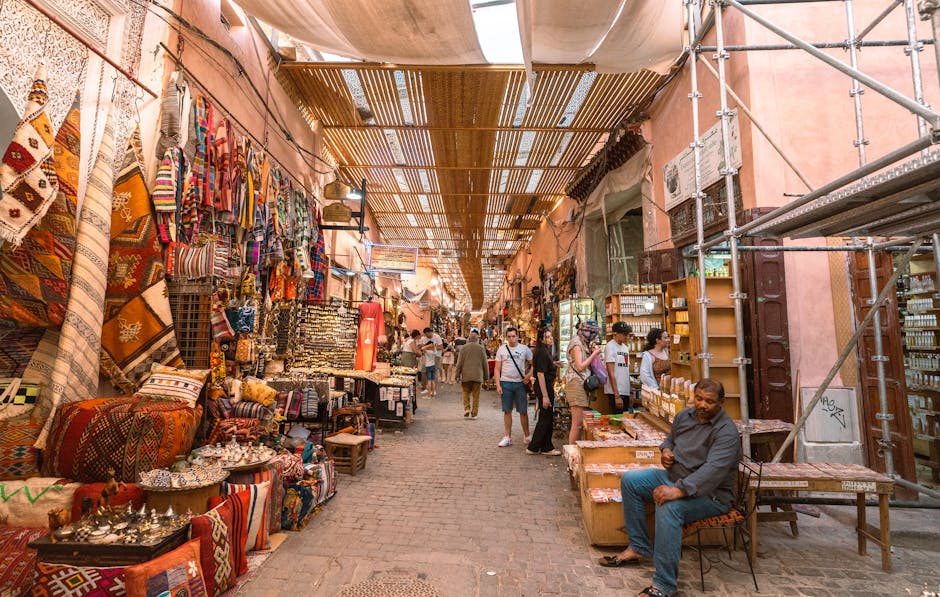
You can still feel that weight of history today. The architecture of the Souk Semmarine is distinct because of its high, arched roof. This structure provides much-needed shade during the scorching summer months, creating a micro-climate that feels significantly cooler than the exposed streets outside. As a local, I often tell friends to look up—the way the dust motes dance in the shafts of light coming through the roof is one of the most photographed sights in the city.
This street is wide compared to the narrow “derbs” (alleys) that branch off it. It’s wide enough for a donkey cart to squeeze past a group of wide-eyed tourists, though you still need to keep your wits about you. The energy here is electric; it’s a place where the ancient world meets modern commerce without missing a beat.
Sensory Overload in Marrakech Souk Semmarine
The first thing you’ll notice about the Marrakech Souk Semmarine is the sound. It’s a symphony of “Balak! Balak!” (the warning cry of cart drivers), the haggling of merchants in a mix of Arabic, French, and English, and the distant call to prayer echoing from the nearby Koutoubia Mosque. It’s a place that demands you pay attention with every single sense.
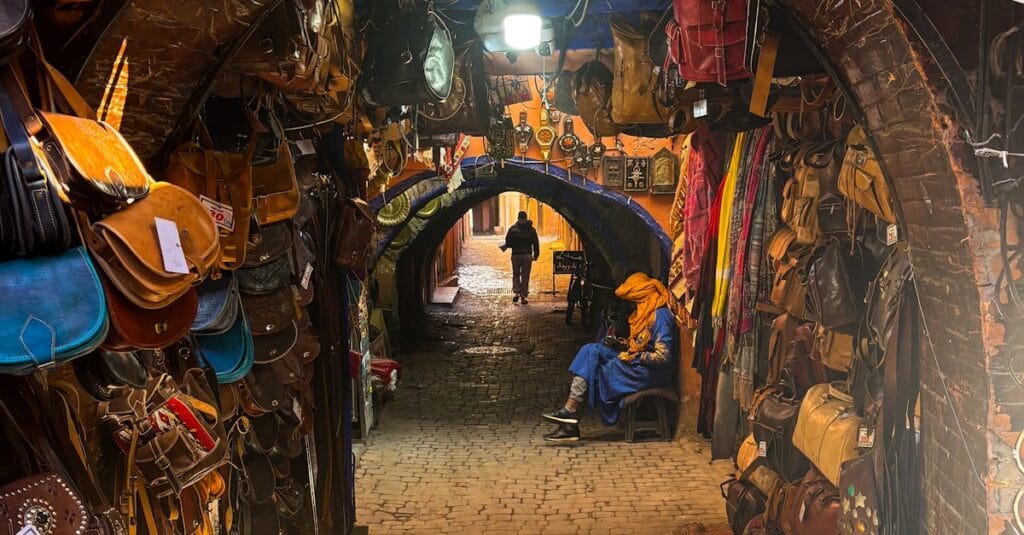
Then, there’s the smell. One minute you’re walking past a stall overflowing with fresh mint and cilantro, and the next, you’re hit with the deep, earthy scent of high-quality leather. The leather workers here are masters of their craft, and the smell of the tanneries often lingers on the bags and shoes displayed in the shops. It’s an authentic, raw scent that reminds you everything here is handmade.
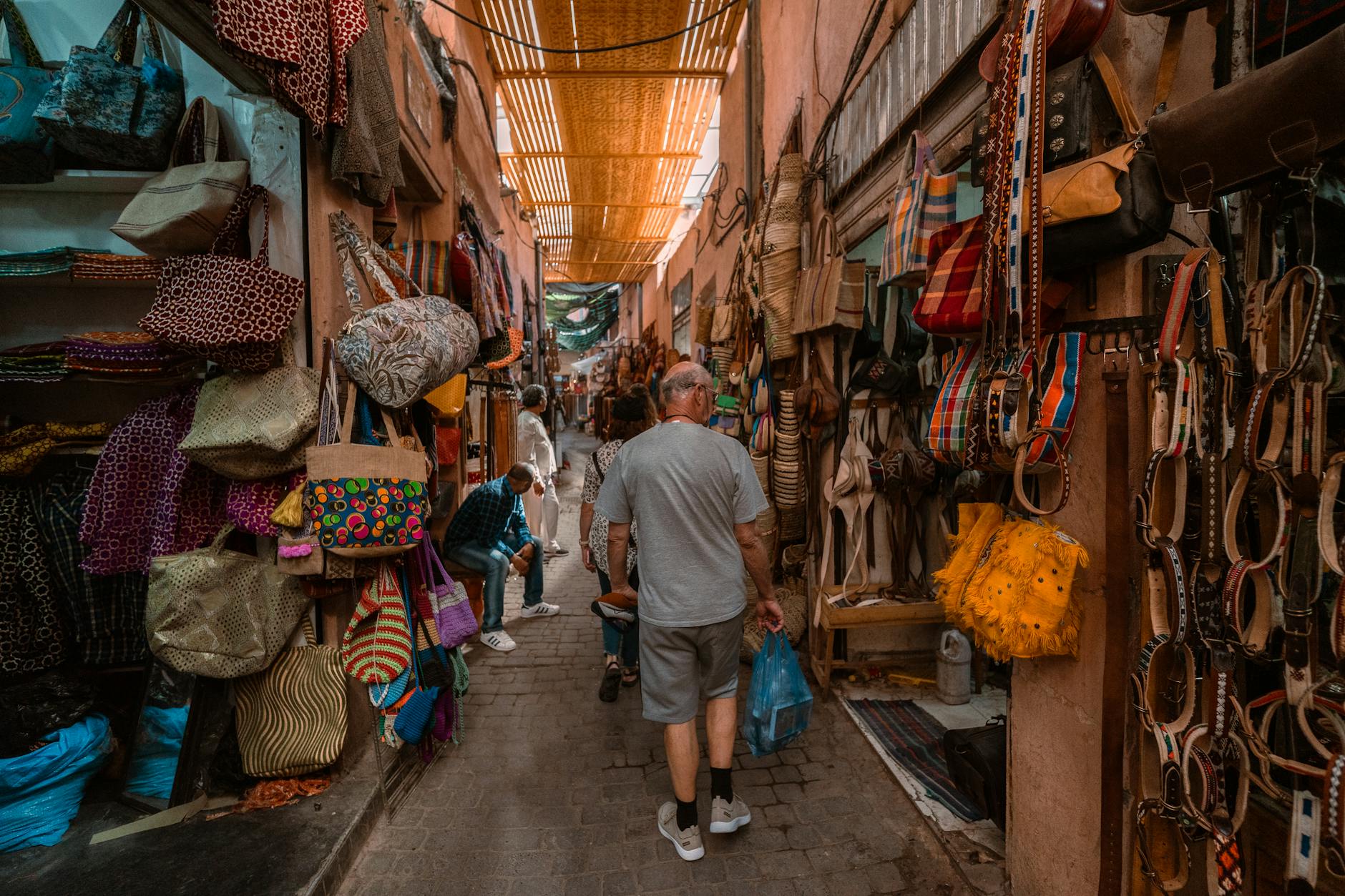
Visually, the Marrakech Souk Semmarine is a kaleidoscope. On either side of the walkway, shops are packed from floor to ceiling with vibrant textiles. You’ll see “handira” (Moroccan wedding blankets) shimmering with sequins, hand-woven Berber rugs with geometric patterns, and rows of pointed leather slippers known as babouches in every color of the rainbow.
What to Buy and How to Haggle
Shopping in the Marrakech Souk Semmarine is an Olympic sport, and the local merchants are the gold medalists. You’ll find some of the highest-quality goods in the city here, but because it’s the main tourist route, the initial prices are often higher than in the smaller, quieter souks. This is where your bargaining skills come into play.
Leather is a huge draw here. You’ll find jackets, backpacks, and weekend bags that could last a lifetime. If you’re looking for something smaller, the embroidered linens and silk scarves are exquisite. I always recommend looking for the shops that specialize in one thing. If a shop sells only brass lanterns, chances are the quality is better than a shop selling everything from magnets to carpets.
Many travelers find the transition from the busy markets to the quiet desert to be the perfect balance for their trip. If you are planning to head out of the city after your shopping spree, you might want to read our Agafay Desert Day Trip vs Overnight Stay: Expert Guide to help you decide how to spend your time in the dunes.
Haggling isn’t just about the price; it’s a social interaction. In Marrakech Souk Semmarine, if you see something you love, don’t ask the price unless you’re prepared to talk for five minutes. Start by offering about 40-50% of their first price and meet somewhere in the middle. Always do it with a smile. If the price doesn’t feel right, it’s perfectly okay to walk away. Sometimes, that’s when they give you their best offer anyway.
Survival Tips for Navigating the Souks
Navigating the Marrakech Souk Semmarine requires a specific mindset. You have to embrace the flow. If you try to fight the crowds or get stressed about losing your way, you’ll miss the magic. My best advice? Get lost on purpose. Or, if you would rather have a local lead the way, our Marrakech medina tour and cooking class takes the stress out of finding the best stalls. The side alleys off the main strip often lead to specialized markets like the Souk des Teinturiers (the dyers’ market) where you can see wool being dyed in massive vats.
Keep your belongings in front of you. While Marrakech is generally very safe for tourists, the crowded nature of the Souk Semmarine makes it a prime spot for pickpockets. A crossbody bag is your best friend here. Also, be wary of “helpful” strangers offering to show you the way to a hidden square or a tannery—they will almost always ask for a tip or lead you to their cousin’s carpet shop.
The tradition of the souq is built on community, so don’t be afraid to sit down for a glass of tea if a merchant offers it. It’s not always a trap to make you buy something; sometimes, they genuinely want to chat. However, if you really aren’t interested in buying, a polite “Non, merci” or “La, Shokran” goes a long way.
Hidden Gems Near the Main Path
While the Marrakech Souk Semmarine is the star of the show, the areas immediately surrounding it offer some of the most authentic experiences in the city. Just a short walk from the main thoroughfare, you can find the Spice Square (Place des Épices). It’s a bit more open and less claustrophobic than the covered souks, and it’s the best place to buy authentic ras el hanout or pure saffron.
If you find yourself visiting during the warmer months, keep in mind that the intensity of the city can be draining. We’ve put together an Agafay Desert Weather in April – July: A Local’s Guide which is useful if you’re looking to escape the city heat for a night in the desert where the breeze is much cooler.
Don’t miss the smaller fondouks—ancient roadside inns that have been converted into artisan workshops. You can often watch master craftsmen carving wood or hammering silver in these quiet courtyards just steps away from the noise of the Marrakech Souk Semmarine. It’s in these quiet corners that you truly understand the level of skill that goes into every item sold in the market.
Practical Information for Visitors
Planning a visit to the Marrakech Souk Semmarine is fairly straightforward, but there are a few logistical things to keep in mind to make your day run smoothly.
- Address: Souk Semmarine, Medina, Marrakech 40000, Morocco (Easily reached from Jemaa el-Fnaa).
- Opening Hours: Most shops open around 9:30 AM or 10:00 AM and stay open until about 8:00 PM or 9:00 PM.
- Best Time to Visit: Early morning (around 10:00 AM) is best to beat the heaviest crowds. Friday mornings are quiet as many shops close for prayer, re-opening in the late afternoon.
- Price Level: Expect to pay anywhere from 50 MAD ($5) for a small scarf to 5,000+ MAD ($500) for a high-quality, large Berber rug.
- Payments: Cash is king. Some larger shops accept credit cards, but you’ll get a better deal if you pay with Moroccan Dirhams.
One thing I always tell visitors is that the Marrakech Souk Semmarine is more than just a market; it’s a living museum. Even if you don’t plan on buying a single thing, just walking the length of it is an essential part of the Marrakech experience. It’s where the city’s pulse is strongest.
If you’re feeling overwhelmed by the planning or want a local expert to help craft your perfect Moroccan itinerary, we are here to help. Whether you want to navigate the souks or escape to the desert, request a free quote from our local team and let us take the stress out of your adventure.
Frequently Asked Questions
Is the Marrakech Souk Semmarine safe for solo travelers?
Yes, it is very safe. However, solo travelers (especially women) may receive more attention from vendors. A firm but polite “No” is usually all it takes to be left alone. Stick to the main paths if you are feeling nervous.
Can I take photos in the Marrakech Souk Semmarine?
Generally, yes, but always ask permission before photographing people or their specific displays. Some shopkeepers are happy to let you take photos if you buy something, while others might ask for a small tip.
What is the best thing to buy in the Souk Semmarine?
Leather goods and high-end textiles are the specialties here. The quality of the bags, belts, and carpets found in the Marrakech Souk Semmarine is often superior to the mass-produced items found on the outskirts of the Medina.
How do I avoid getting lost in the souks?
The Marrakech Souk Semmarine is the widest street; if you feel lost, keep walking until you find this main artery. From there, you can easily find your way back to Jemaa el-Fnaa by following the flow of people.
Do I need a guide to visit the Marrakech Souk Semmarine?
You don’t need one, but a local guide can help you find specific high-quality shops and can act as a buffer during the haggling process. If it’s your first time in a Moroccan medina, a guide can definitely make the experience less stressful.