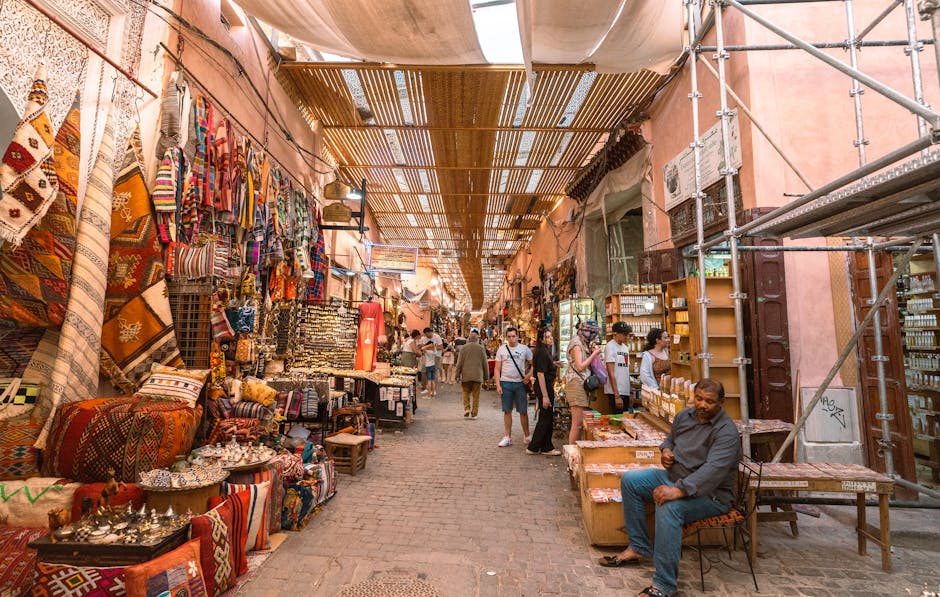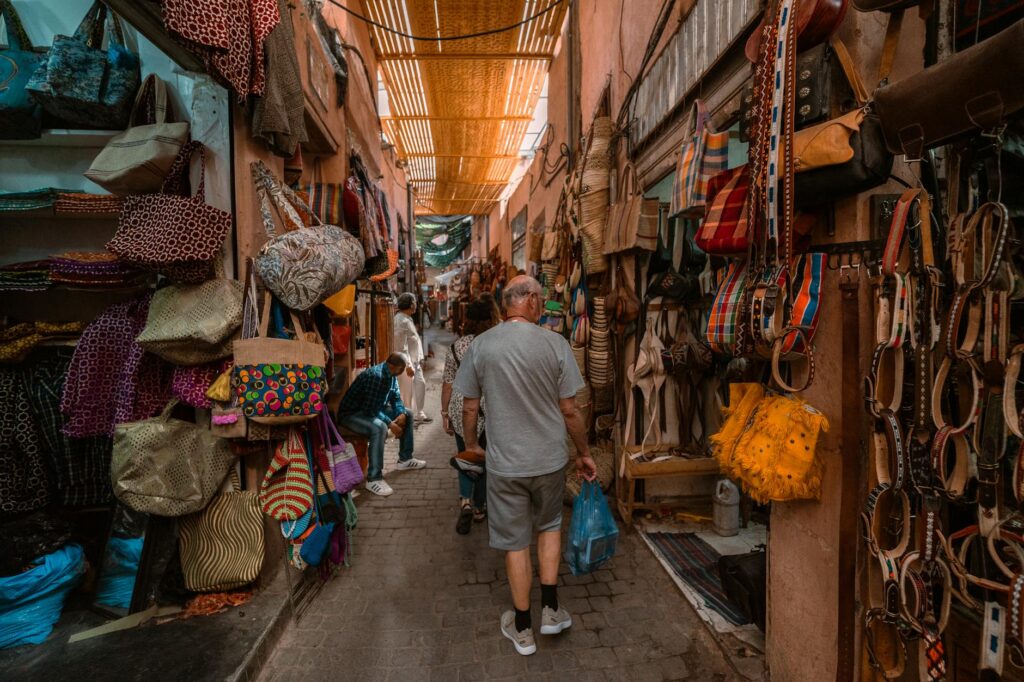
If you want to feel the true heartbeat of the Red City, standing in the middle of Jemaa el-Fnaa Marrakech as the call to prayer echoes over the square is an experience you will never forget. It is chaotic, loud, and smells like a mix of grilled meats and blooming jasmine. For many of us who live here, this square is the center of the universe. It is a place where ancient storytelling meets modern tourism, and somehow, it all works together in a beautiful, messy dance.
Table of Contents
The Living History of Jemaa el-Fnaa Marrakech
Daytime Wonders: Juice Stalls and Sunshine
The Night Transformation: A Foodie Paradise
Performers, Storytellers, and Secret Spots
Practical Information for Your Visit
Frequently Asked Questions
The Living History of Jemaa el-Fnaa Marrakech
Jemaa el-Fnaa Marrakech has been the soul of the city since the 11th century. Back then, it was a place of public justice and trade. Today, it is recognized by UNESCO as a Masterpiece of the Oral and Intangible Heritage of Humanity. When you walk across these stones, you are walking on centuries of history. It is not a museum where things are kept behind glass; it is a living, breathing space where traditions are passed down from father to son.
According to Wikipedia, the name itself has several meanings, often debated by historians, but most locals simply know it as “the place.” I love coming here early in the morning when the square is being swept and the first carts are arriving. There is a quiet tension in the air before the madness begins.
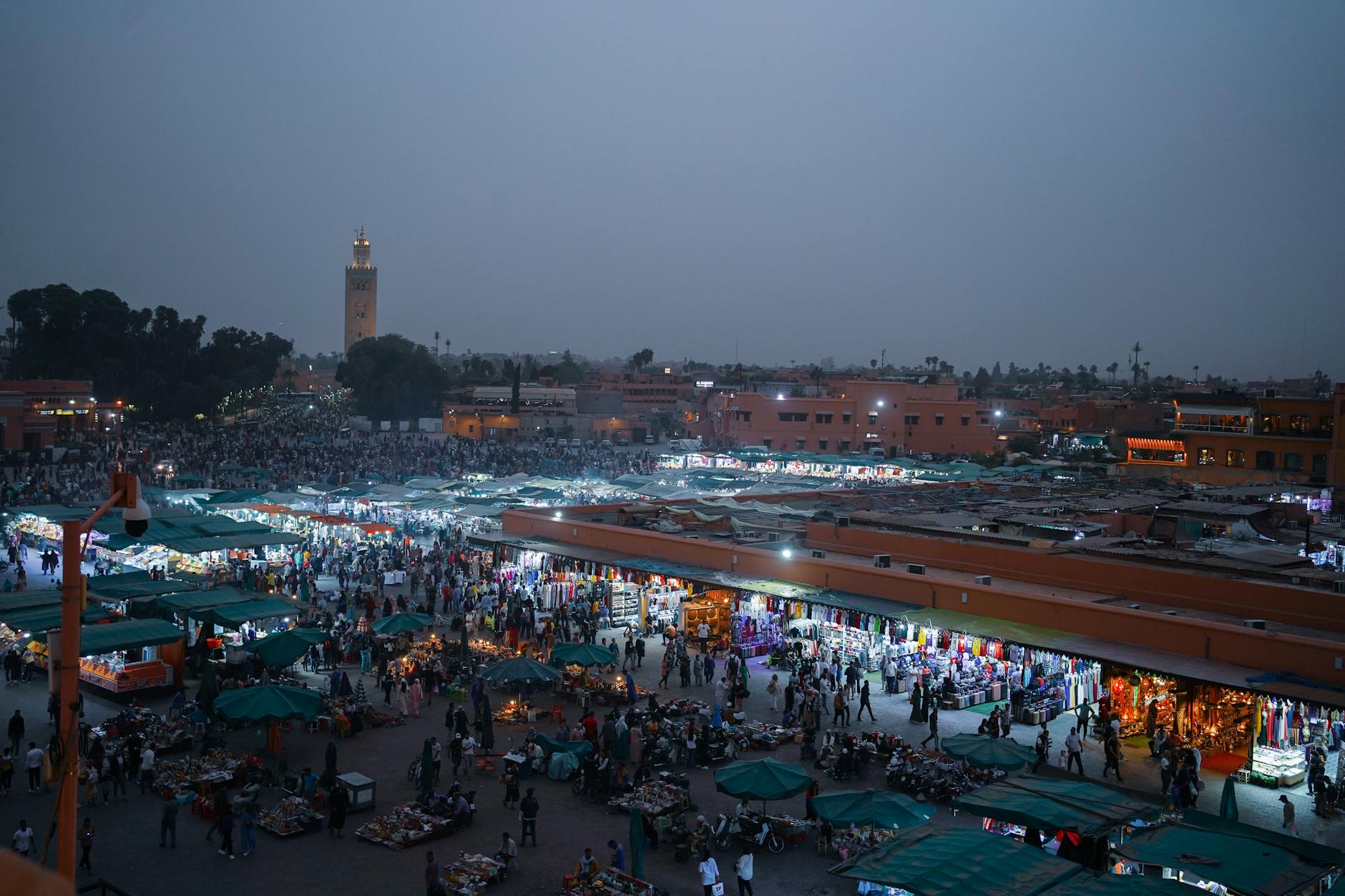
You can see the traces of the past in the architecture surrounding the square. The iconic Koutoubia Mosque minaret stands tall nearby, acting like a North Star for anyone lost in the maze. If you ever feel overwhelmed by the noise, just look for that tower to find your bearings.
Daytime Wonders: Juice Stalls and Sunshine
When you walk through Jemaa el-Fnaa Marrakech during the day, the first thing that hits you is the color. Rows and rows of orange juice stalls compete for your attention. Each stall is numbered, and the vendors are famous for their friendly (and sometimes very persistent) banter.
🍊 My local tip: Grab a glass of freshly squeezed juice from Stall 4 or Stall 10. It usually costs about 4 to 10 dirhams depending on the mix. It is the best way to cool down when the Moroccan sun is at its peak.
During the daylight hours, you will see:
- 🐍 Snake charmers playing their flutes to cobras (be careful, they will put a snake on your neck before you can say “no!”).
- 🐒 Henna artists offering to paint intricate designs on your hands.
- 🎭 Traditional Gnaoua musicians in colorful robes.
- 🍵 Herb sellers with mountains of dried mint and mysterious roots.
If you want to escape the square’s intensity for a bit to see a different side of the region, you might wonder is Agafay Desert worth visiting in 2026 for a change of pace. While the square is all about noise and people, the desert offers a silence that balances your soul perfectly.
The Night Transformation: A Foodie Paradise
The transition of Jemaa el-Fnaa Marrakech from day to night is nothing short of magical. As the sun begins to set, a fleet of wooden carts rolls into the center. Within minutes, they assemble entire outdoor restaurants. Smoke starts to rise from dozens of charcoal grills, carrying the scent of cumin, ginger, and grilled lamb across the Medina.
Eating at Jemaa el-Fnaa Marrakech is a rite of passage. If you want to go deeper than the square, our Marrakech medina tour with a cooking class and Agafay dinner walks you through the old city and ends with dinner out in the desert. You sit on long wooden benches, squeezed in next to locals and travelers from all over the world. The energy is electric. You might hear the clatter of plates, the shouting of “waiters” trying to get you to sit at their stall, and the distant drumming of street performers.
The square feeds right into the markets, so if you are planning to head deeper into the alleys after your meal, check out my Marrakech Souk Semmarine guide to shop like a local. It is easy to get lost, but that is honestly part of the fun.
Here are some must-try foods in the square:
- 🍢 Brochettes (skewers) of spiced beef or chicken.
- 🥣 Harira – a hearty tomato and lentil soup that is a Moroccan staple.
- 🐌 Babbouche – traditional snail soup (don’t knock it until you try the spicy broth!).
- 🍖 Tanjia – slow-cooked meat that is tender enough to fall off the bone.
Performers, Storytellers, and Secret Spots
Watching Jemaa el-Fnaa Marrakech from a rooftop is my favorite way to spend an evening. As the square fills with circles of people (called halqas), you can see the true performance begin. In these circles, storytellers recount ancient tales in Arabic and Berber. Even if you don’t understand the words, the drama in their voices and the reactions of the crowd are captivating.
You will also find:
- 🥊 Street boxers and acrobats showing off their strength.
- 🎲 Groups playing traditional games for small bets.
- 🎸 Fusion bands mixing electric guitars with traditional drums.
- 🔮 Fortune tellers sitting quietly on their rugs.
Navigating Jemaa el-Fnaa Marrakech can be intense for some. If a performer catches your eye, it is polite to drop a few dirhams in their hat. This is how they make their living and keep these traditions alive. If you take a photo of the snake charmers or monkeys, they will expect payment, so always have some small change ready.
Most people visit Jemaa el-Fnaa Marrakech multiple times during their stay because it never looks the same way twice. One night it might feel like a circus, the next like a spiritual gathering. It adapts to the mood of the city.
Practical Information for Your Visit
I always recommend Jemaa el-Fnaa Marrakech to first-timers, but you need to go with the right mindset. Be prepared for a sensory overload. Here is some practical advice to make your visit smoother.
📍 Address: Place de Jemaa el-Fna, Marrakech 40000, Morocco.
⏰ Hours: The square is “open” 24/7, but the real action starts after 10:00 AM and peaks between 6:00 PM and midnight.
💰 Price: Entry is free! You only pay for what you eat, drink, or the tips you give to performers.
👕 Dress Code: Keep it respectful. While Marrakech is modern, the Medina is traditional. Shoulders and knees covered is usually a good rule of thumb.
Beyond Jemaa el-Fnaa Marrakech, the city has so much to offer, from hidden gardens to luxury desert escapes. You can browse our full range of Agafay desert day trips to pair your time in the square with a sunset in the dunes. If you are feeling overwhelmed by the planning, let us help you. We love showing people the “real” Morocco that most tourists miss.
Whether you need a custom itinerary or just a few local tips, we are here for you. Check out DestinaRoad for more insider guides or reach out for a free quote to start planning your dream Moroccan adventure today.
Frequently Asked Questions
Is Jemaa el-Fnaa Marrakech safe at night?
Yes, it is generally very safe. There are many plainclothes police officers around. However, like any crowded tourist spot, keep an eye on your pockets and bags to avoid pickpockets.
What is the best time to visit the square?
Sunset is the “golden hour.” Get there around 5:00 PM or 6:00 PM, grab a seat at a rooftop cafe like Le Grand Balcon du Café de la Poste, and watch the food stalls set up as the sky turns pink.
Can I take photos of the performers?
Yes, but they will ask for money. If you don’t want to pay, don’t point your camera directly at them. A typical tip for a photo is 10 to 20 dirhams.
Is the food in the square safe to eat?
Generally, yes. Look for the stalls that are crowded with locals—that is a sign the food is fresh and the turnover is high. Stick to bottled water and make sure your meat is cooked through.
How do I handle the “aggressive” vendors?
A polite but firm “Non, merci” or “La, Shokran” (in Arabic) while continuing to walk usually does the trick. Don’t feel pressured to stop if you don’t want to.
Eating beyond the square: the food stalls are only the start. See our guide to where to eat in Marrakech for the rooftop restaurants, Gueliz classics and desert dinners worth booking — we reserve any table for you, free.